
Inspection and fault workflow guide
From vehicle inspection finding to repair: keep the fault visible until the work is actually closed.
An inspection has limited value if the finding disappears when the checklist is submitted. Crew Keys keeps qualifying PMCS and return issues tied to the vehicle as persistent faults, then preserves the repair or resolution in history.
Crew Keys example
The checklist records the finding; the fault record carries the problem forward.
Inspection context stays connected to the vehicle while unresolved issues remain visible after the individual PMCS or checkout record closes.
Actual Crew Keys interface · fictional demonstration data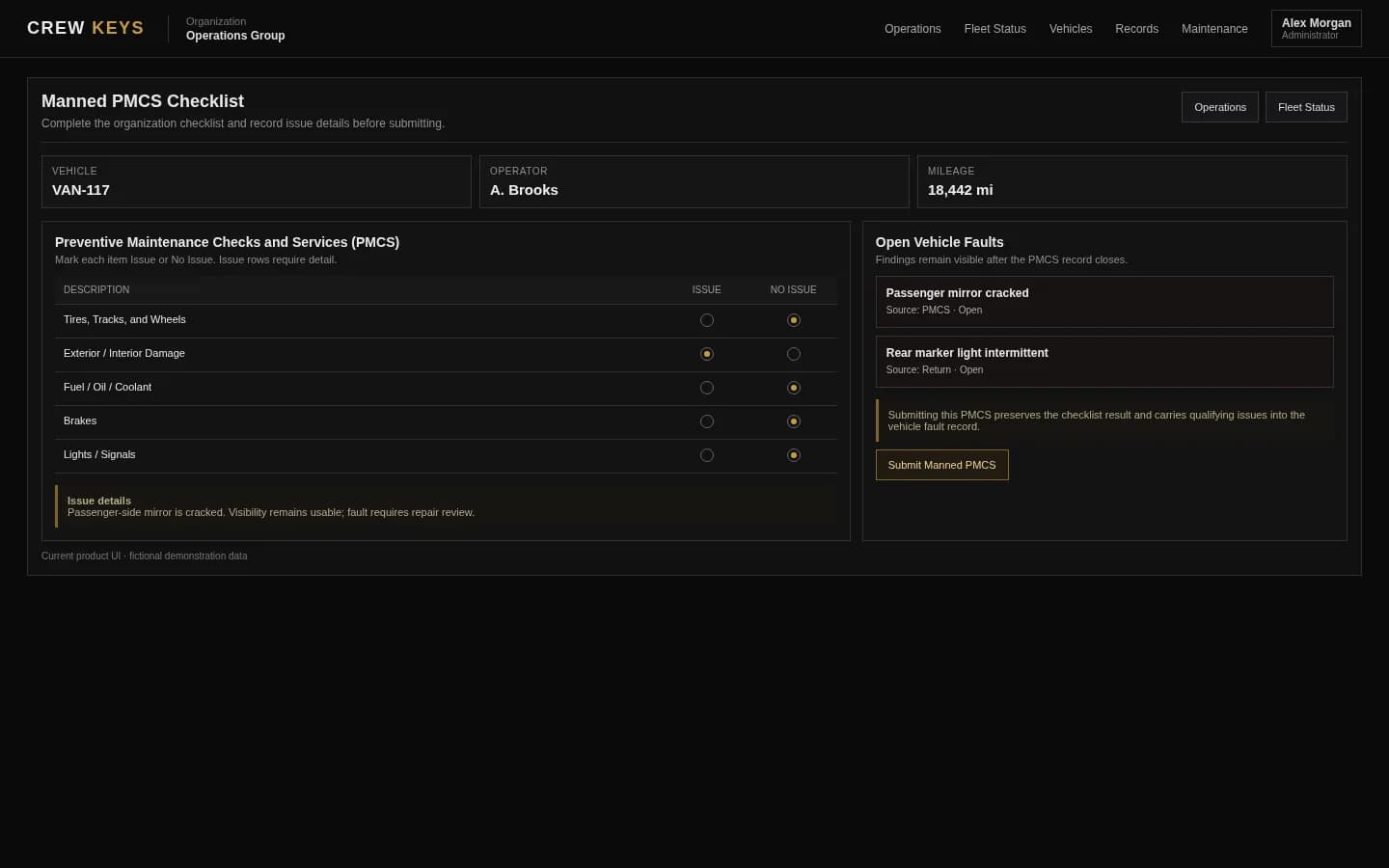
Lifecycle
A useful inspection workflow continues after Submit.
Operator completes PMCS or the required vehicle checklist.
Issue rows capture enough detail for another person to understand the problem.
Qualifying findings become open vehicle faults rather than disappearing with the form.
The fault can remain informational or contribute to an out-of-service or maintenance posture.
An administrator records what was done rather than merely deleting the issue.
The original finding and subsequent resolution remain reviewable with the vehicle.
Example
Passenger-side mirror is cracked.
The PMCS captures the visible condition and operator context. The important question is what happens after the PMCS ends.
PMCS finding: Exterior / Interior Damage → Issue
Issue detail: Passenger-side mirror is cracked.
Fault state: Open
Availability decision: Continue operation or place out of service based on policy/severity.
Resolution: Mirror replaced; fault closed with repair context.
Why persistence matters
Three things a standalone checklist usually cannot answer later.
Is the issue still open?
A completed inspection only proves someone saw the condition at that moment. A persistent fault answers whether it still needs action.
Did it affect availability?
The same finding may be informational, out-of-service, or maintenance-related depending on the organization and the actual condition.
What fixed it?
Resolution should preserve who addressed the fault, what was recorded, and when the issue stopped being active.
Operational principle
Do not use the checkout record as the only home for an unresolved vehicle problem.
A checkout eventually closes. The vehicle problem may not. Keeping a separate persistent fault linked back to the source inspection allows the custody record to end without making the maintenance issue disappear.
Explore the Crew Keys inspection workflow →Continue reading
Related Crew Keys workflows and resources.
See the full Crew Keys checklist and PMCS workflow.
View resource →Motor pool managementConnect faults to maintenance posture and operational availability.
View resource →Vehicle checkout softwareCapture inspection and return findings as part of the same vehicle use record.
View resource →From template to workflow
Do not make the next operator rediscover the same fault.
Keep inspection findings, open faults, maintenance decisions, repairs, and historical resolution connected to the permanent vehicle record.